
 Authorised dealer



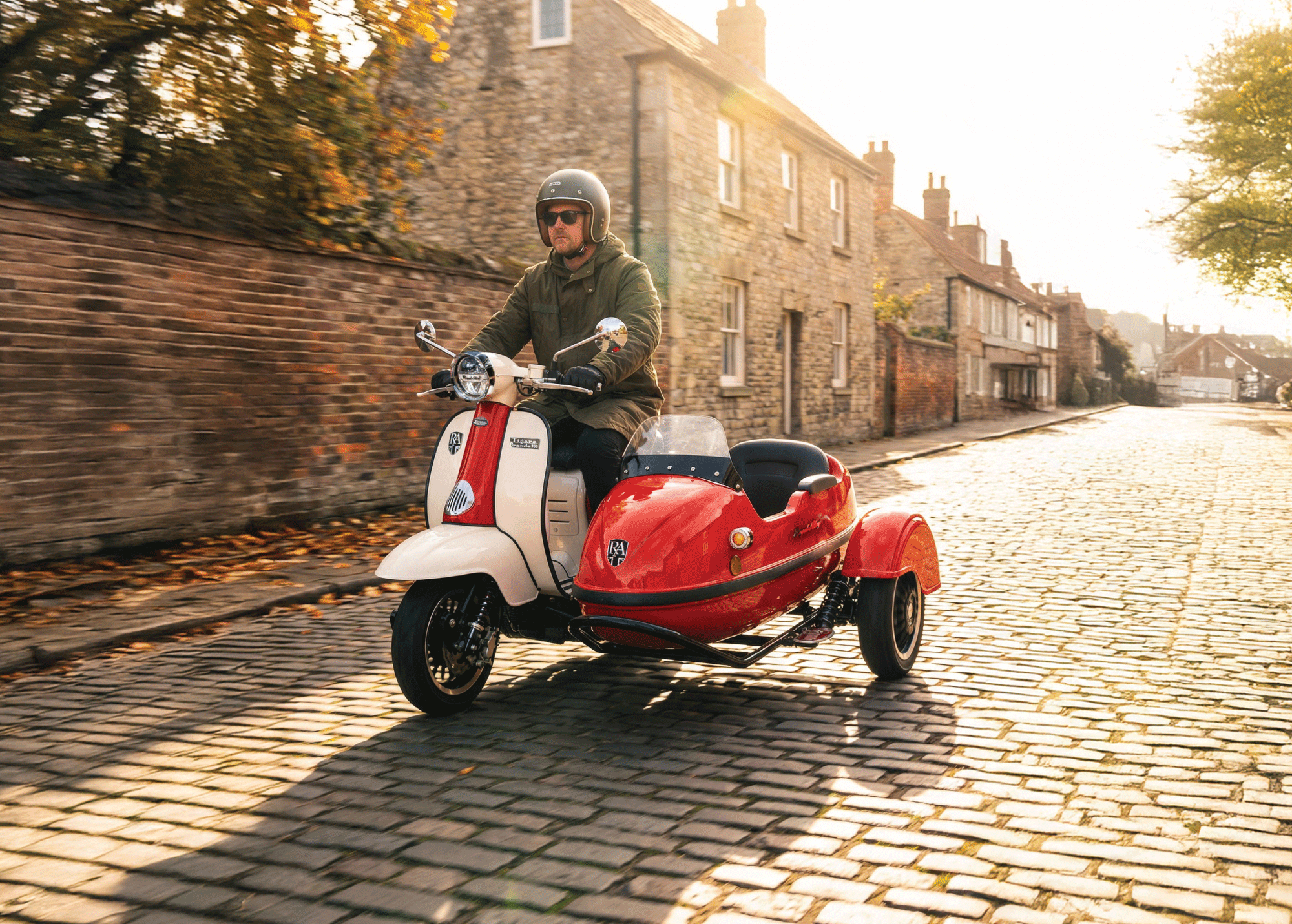
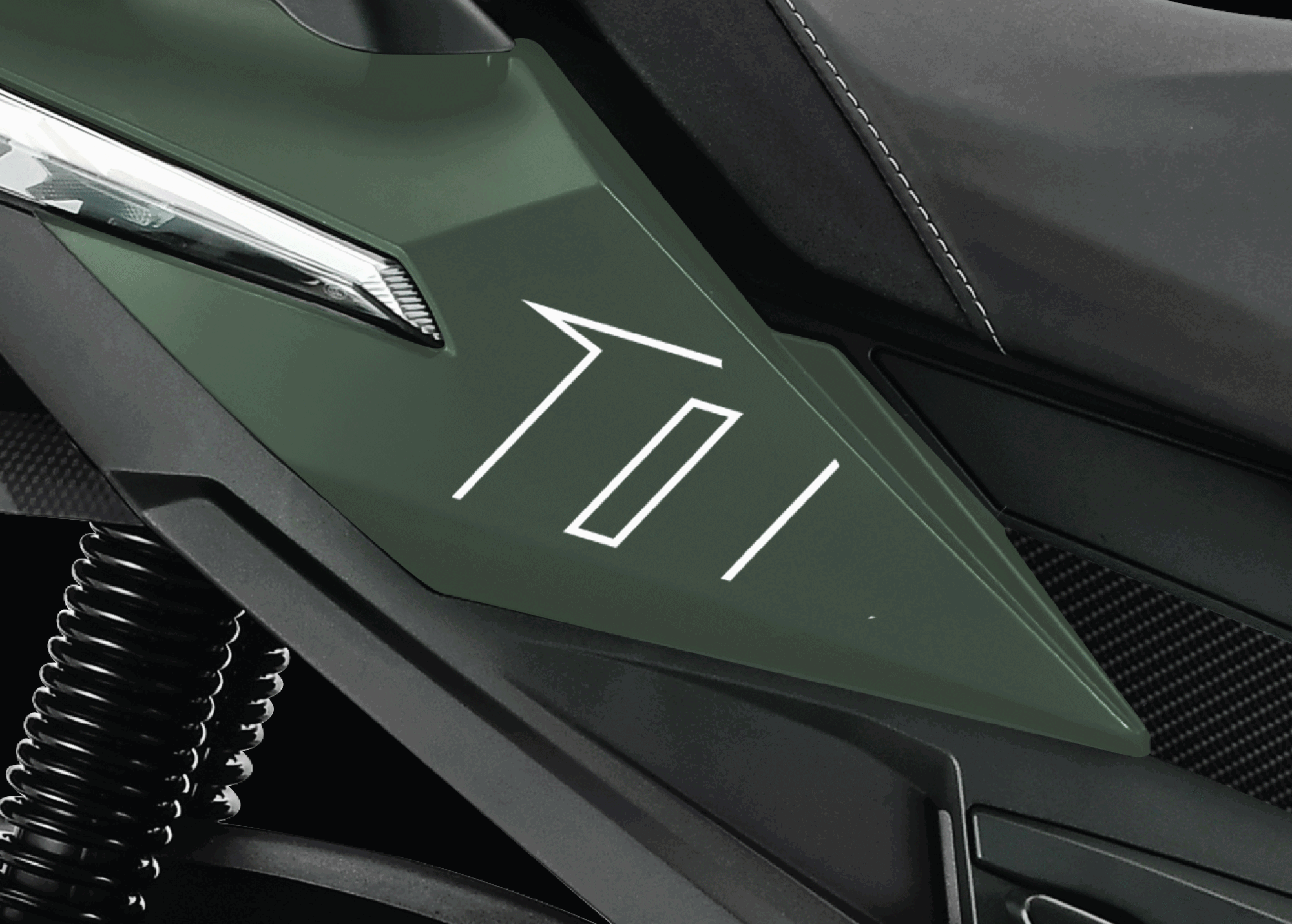

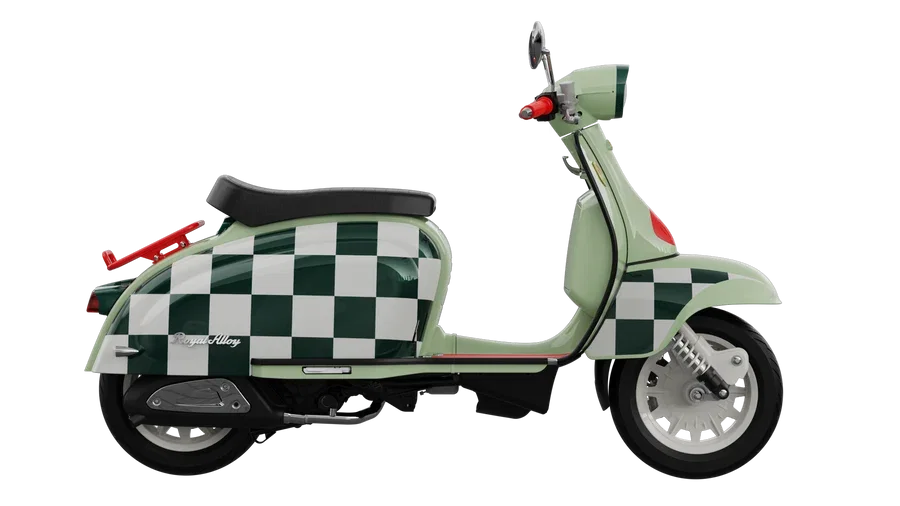
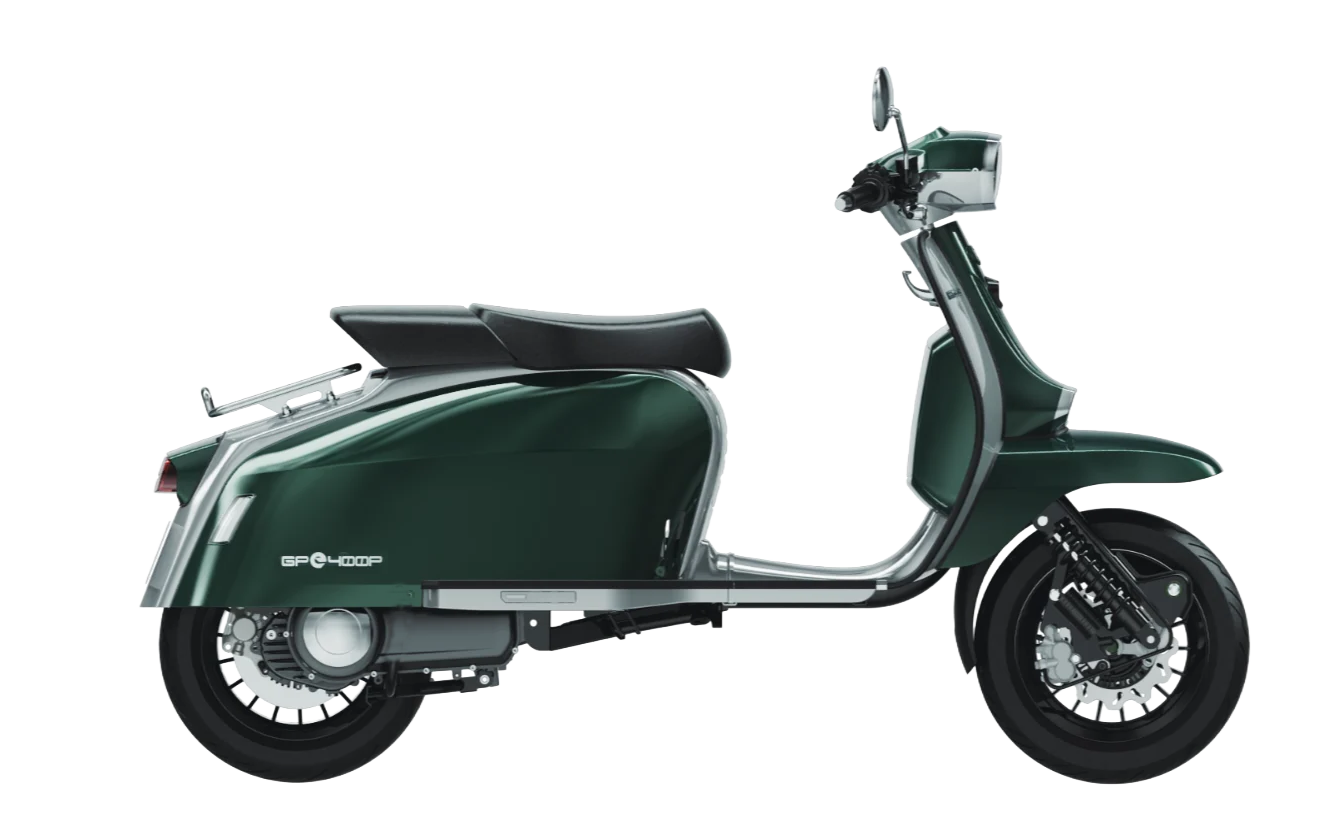
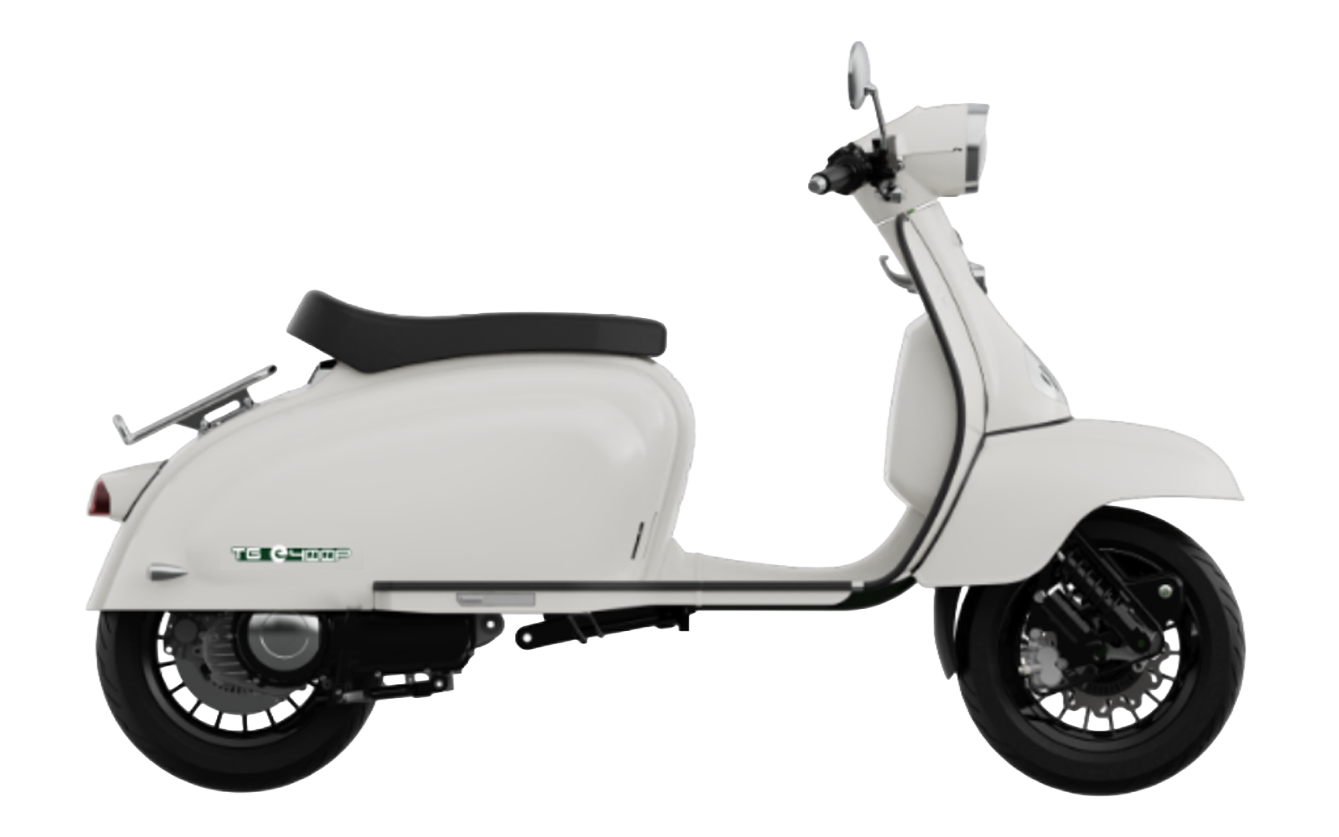


Royal Alloy has now released pricing and availability for its Electra range. We’ll get to the prices and pre-order details at the end, but first, let’s dive into the facts behind the GT400EV, GP400EV and TG400EV.
There’s a lazy assumption that going electric means leaving character behind. Royal Alloy’s Electra range argues otherwise. It takes the brand’s signature silhouettes, the GT, GP and TG, and moves them to electric power. The lines riders know stay put, and what sits beneath them changes completely.
A steel space frame and steel bodywork carry the familiar styling. This is not a generic electric commuter in a plastic shell. It’s a scooter with the poise of a classic, made to be seen and enjoyed on the way to wherever you’re going.
A serious drivetrain
Most electric scooters take the obvious route and put a hub motor in the rear wheel. Royal Alloy has gone another way. The Electra uses a side-mounted motor that combines the motor, electronic control unit, gearbox and single-sided swingarm in one compact unit. That saves weight, and a two-stage transmission multiplies torque, which helps on inclines, a traditional weak spot for hub-motor machines.
The numbers are impressive. The motor is rated at 12 kW (16.1 hp) and peaks at 26 kW (34.9 hp), with up to 330 Nm of instant torque (110 Nm rated). That’s enough to hit 50 km/h from standstill in 2.6 seconds and reach a top speed of 84 mph, all on an A2 licence.
Power-to-weight is where it gets interesting. The lightweight GT manages around 0.24 PS/kg, while the GP and TG come in at about 0.22. Next to the 0.175 PS/kg of a Porsche Macan 4, that’s roughly 26 to 39% better, depending on the model. A scooter and a performance SUV are very different machines, but the point stands: electric torque arrives the moment you twist the throttle, with no revving and no waiting for a power band. Motor efficiency is over 94%, with system efficiency above 91%.
Proven in Liyang
The Royal Alloy UK team recently travelled to Liyang, China, to put the Electra range through its paces. The 400 models made an immediate impression.
“People hear ‘electric scooter’ and picture something polite. Quiet, sensible, slightly apologetic. This isn’t that. The first time I properly opened the throttle, I laughed out loud, because there’s no build-up. It’s just there, all at once, and it keeps pulling. And then you remember it’s still a Royal Alloy, with the steel body, the classic lines and the chrome, and it doesn’t quite add up. That’s what I like about it. It looks like it should be taking you for a gentle ride to the café, and instead it’s embarrassing things it has no business embarrassing.
“We filmed a fly-by with me riding and put it on the Royal Alloy UK page. Have a look if you think I’m overselling it.”
Luke Gregory, Managing Director, Royal Alloy UK
The battery behind the performance
Much of the Electra’s appeal comes down to its battery. Conventional lithium-ion packs move ions through a liquid or gel electrolyte, and that liquid accounts for much of the weight that has long limited how practical they are.
The Electra’s 8.1 kWh semi-solid NCM battery contains far less liquid. The result is greater power density at lower weight. The chemistry is also more stable than standard lithium-ion, making thermal runaway, the chain reaction that follows damage to a lithium-ion pack, much less likely.
Longevity is strong too. The pack keeps over 80% of its capacity after around 1,400 charge cycles, which should outlast the needs of almost any rider.
Range and charging that fit real life
The battery is rated for up to 137 miles at a steady 50 km/h. Charging is flexible:
-
At home: the 1.2 kW cable plugs into a standard socket.
-
On the go: the 7 kW on-board charger supports DC fast charging, taking the battery from 20 to 80% in about 45 minutes, roughly a coffee and a stretch.
-
On the move: regenerative braking, in Standard and Enhanced modes, recovers energy every time you slow down.
Composed whenever you ride it
Power only matters if the chassis can handle it. The Electra pairs adjustable suspension front and rear with 220 mm discs and ABS at both ends, plus traction control. Whether you’re threading through town or stretching out on a back road, the ride stays settled.
The range is light for what it offers: the GT weighs 145 kg, the GP 158 kg and the TG 160 kg.
Technology on board
Every Electra comes with a front-facing camera as standard. The range also introduces the largest displays Royal Alloy has ever offered, with smartphone connectivity and rider modes built in.
The verdict
The Electra doesn’t ask riders to choose between style and the future. It offers the classic GT, GP and TG shapes with instant torque, A2-licence accessibility, fast charging, modern connected features and proper safety kit as standard. Whichever you pick, it’s a way to ride further, faster and cleaner, without losing the character that made you want a Royal Alloy in the first place.
The range comprises three models: the GT400EV (£5,999 OTR), GP400EV (£7,999 OTR) and TG400EV (£8,199 OTR).
The bikes are on the water and expected to arrive in January 2027. They’re available to pre-order now with a £99 reservation deposit via royal-alloy.co.uk.

